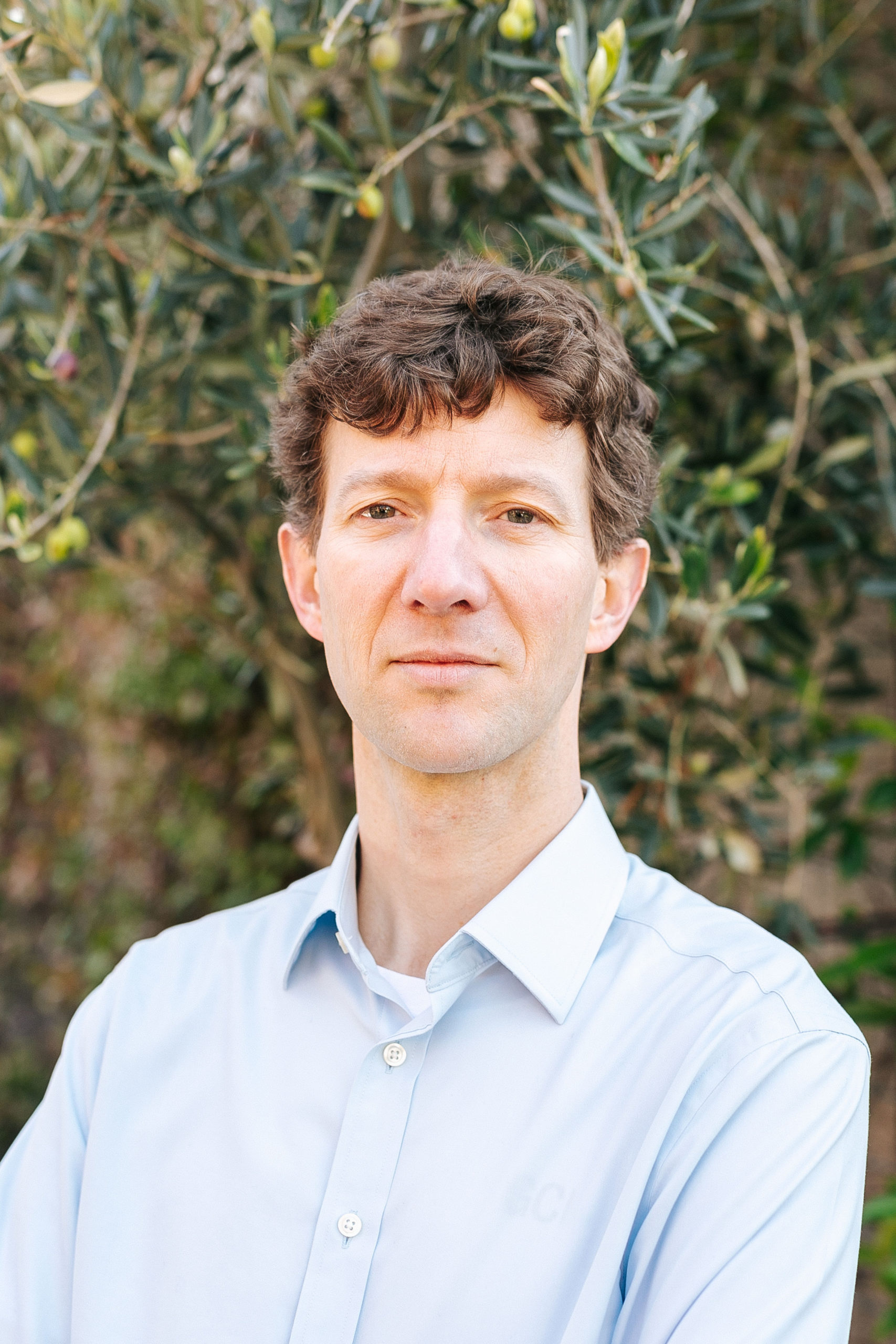
Dimitri's Story
Working in the Fossil Fuel Industry
I started my career as a geo-consultant in oil and gas in 2001. At the time, in the Netherlands, earth science jobs were hard to come by. The economy was sluggish, and opportunities were limited. The consultancy role quickly led to a permanent position with Shell, where I worked from 2004 to 2008 on gas fields in the Netherlands and the UK.
Shell offered incredible freedom to develop professionally. The company’s learning and development programmes were extensive, and you were encouraged to shape your career in whatever direction interested you. As a geologist, the subsurface was endlessly fascinating. Understanding what lay kilometres beneath our feet, and working with multidisciplinary teams to design infrastructure that could extract resources from the ground, was intellectually stimulating and genuinely exciting.
I also thrived on the environment. I was surrounded by high achievers who were ambitious, curious and driven. That collective energy pushed everyone to work hard and deliver. There was a strong sense of pride in doing things well, and in solving complex technical problems together. The travel opportunities were another bonus, both professionally and personally, and in many respects the company took good care of its people.
When I Realised It Was Time to Leave
In 2009 I worked in Perth on Shell’s Australian assets. That was the year of the Copenhagen COP, and climate change was very much on Shell’s radar—in 2006 they even screened Al Gore’s An Inconvenient Truth followed by an open, honest discussion. But when the 2009 COP collapsed, it was clear things weren’t heading in the right direction. I remember an internal presentation showing CO2 hitting 650ppm by 2100, well above the 450ppm “safe threshold.” When I asked if that was a problem, the answer was that Shell wasn’t in a position to change it.
Around the same time, I discovered Australia’s geothermal potential—small Aussie companies were doing pioneering work using the country’s high geothermal gradient to generate electricity from hot water at depth. It made me question if Shell was doing enough so I drafted a proposal for Shell to diversify into geothermal energy, and it got some traction. But in 2011, a very senior person told me that while Shell understood climate change needed solving, Shell wouldn’t invest in non-fossil projects at scale for at least 15 years. That’s when I knew I had to resign.
Accepting that reality took time. Walking away from a well-paid, prestigious career was not easy, and it took another year before I finally resigned. The core issue was values. The company, and the industry more broadly, prioritised profit and shareholder returns over leading the energy transition at the pace required. I believed that multinationals not only had the capacity to lead, but a responsibility to do so.
I became convinced that if I wanted to change direction, I needed to go back to university. I enrolled in a PhD at the University of Melbourne, focusing on climate science and the energy transition. Financially, it was a significant step backwards, but it felt like the right move.
What are you doing today?
Today, I am the Chief Scientist at the Australasian Centre of Corporate Responsibility. My role is to integrate climate science into ACCR’s research and advocacy work. ACCR is an independent organisation that works with investors to identify and mitigate climate-related financial risks.
We focus on heavy-emitting companies and sectors, using shareholder strategies to accelerate decarbonisation. The goal is to shift corporate behaviour by aligning it with scientific reality and long-term value creation.
Many of the skills I developed in oil and gas have transferred directly into this role. My background in the energy sector, combined with climate science expertise, allows me to help investors understand both the risks of inaction and the opportunities that come with a well-managed transition. Project management skills apply everywhere, regardless of sector. So does the ability to work across disciplines and translate between different technical languages.
What matters most to me now is alignment. I feel that I am living the reasons why I left the fossil fuel industry. My work reflects my values, and that gives me a strong sense of purpose.
Parting Reflections
I left Shell because of a values misalignment. That seems obvious in hindsight, but it was not obvious for a long time.
One thing I would say to anyone considering a transition is this: do not underestimate how much you know, and do not underestimate the skills you have acquired. People with oil and gas backgrounds understand how to execute complex projects and how to run organisations effectively. Those skills are invaluable in any sector, including renewables and climate-focused work.
Do not feel guilty about your past. Be glad that you recognised the need to change direction, and use your skills to contribute to that change. If you are considering a PhD, my advice is to do it early if you can. It is possible later in life, but it is significantly more challenging. That said, you absolutely do not need a PhD to change careers or make a meaningful contribution to the energy transition.
Finally, accept that change is often slow and incremental, until suddenly it is not. The need for change in our energy systems is overwhelmingly clear, yet the transition itself is complex and touches every part of society. It involves difficult trade-offs and painful compromises. But it is essential, both for the climate and for the long-term liveability of our world.