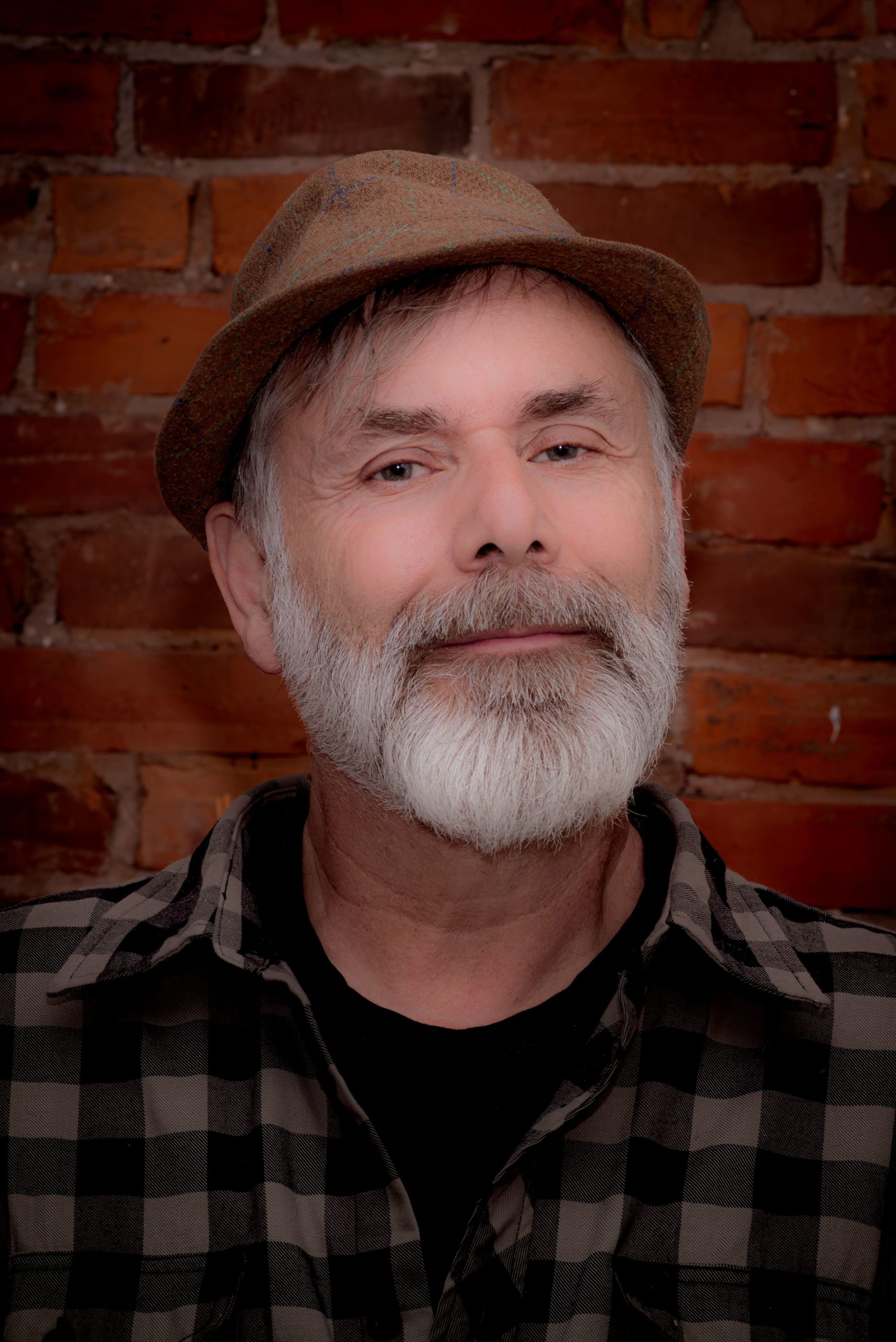
Ross's Story
Working in the Fossil Fuel Industry
I began working in the fossil fuel industry in 1979, at the age of twenty, while studying a double degree in Chemical Engineering and Commerce at McMaster University in Hamilton, Canada. My first role was a summer job as a relief technician at a nearby Gulf Oil Canada refinery.
The realities of the industry were immediate. The day before I started, one worker had been killed and another blinded by hydrofluoric acid. Later that summer, while I was on shift, a massive fire erupted in the main stack and melted its inner core. It was the men I worked alongside who fought that fire. At the time, they were all men: decent, hardworking people who understood the risks of the job. I developed a deep respect for those who showed up every day knowing their work could be dangerous, sometimes life-threatening, so that society could keep moving.
The following summer, I joined Imperial Oil’s head office in a marketing support role, which led to a full-time offer the next spring. That decision shaped the next three decades of my life.
Most of my career was spent on the supply side of the downstream business, working across crude supply, transportation, refining and economics. I also contributed to strategic studies on refinery reconfigurations, shutdowns and expansions, as well as crude sourcing opportunities. That work continued throughout my career, and in my final years I was deeply involved in strategies to maximise Imperial’s oil sands investments.
When I Realised It Was Time to Leave
In the early 2000s, I became increasingly concerned that the world was failing to respond seriously to climate change. I had studied the greenhouse effect at university in 1979, when it was framed as a technically solvable problem, much like acid rain or ozone depletion.
I followed international initiatives such as Rio and Kyoto with genuine hope, only to watch them falter. At the same time, I saw disinformation campaigns take hold, some driven by my employer’s owner, Exxon.
While I worked in refining, it was easy to justify my role by pointing to the immediate need for fuels. That justification weakened once I became involved in major oil sands projects. I managed the internal conflict by telling myself that the decision to exploit the oil sands belonged to governments and corporations, not to me. If it was going to happen regardless, then my responsibility was to help ensure it was done as well as possible.
The turning point came when I was asked to relocate from Toronto to Calgary to mentor younger employees working more closely with ExxonMobil management. After meeting my prospective manager, I realised I was hoping the incentives I had requested would not be approved. That moment made it clear I no longer wanted to be there. The next day, I submitted my notice for early retirement at 55. Despite leaving my best-paid role, my best boss, and strong encouragement to stay, the decision felt unquestionably right.
What I’m Doing Today
After retiring in 2014, I enrolled in a Master of Fine Arts in Creative Writing in California, focusing on poetry. One of the main draws was eco-poet Brenda Hillman, whom I had met at a writing conference and who encouraged me to apply to her programme in the East Bay near San Francisco. Shortly before we met, she and her husband, former US Poet Laureate Robert Hass, had chained themselves to the White House fence in protest against Keystone XL.
At that same conference, Brenda and I debated the merits of blocking the pipeline. A month later, she invited me to join the MFA programme.
In her eco-writing course, we combined poetry with short prose. After the course ended, I cold-pitched an op-ed to the Canadian outlet iPolitics. They published it under the headline “Out of gas: If the Paris accord survives, the oilsands sector is doomed.” Since then, I have published more than 80 op-eds in iPolitics, Canada’s National Observer and Maclean’s. My work challenges government, industry and environmental hypocrisy, and pushes back against myths of an oil sands resurgence.
My poetry collection Moving to Climate Change Hours was published in 2020 and named one of CBC’s best poetry books of the year. I have also created video versions of my poems, screened internationally, including at the International Video Poetry Festival in Athens. I have written a memoir about my years in the industry and my transition into writing and activism.
Parting Reflections
Our society’s relationship with fossil fuels is deeply complicated. Towards the end of my career, I believed that presenting clear facts could cut through polarised debates and drive real action.
I no longer believe that. Political posturing too often replaces planning. Canada’s Prime Minister, Justin Trudeau, spoke convincingly about climate change over nearly a decade in power, yet delivered little. This was not simply due to opposition, but to the absence of a credible plan. In my writing, I kept returning to the same question: where is the plan?
My hope now is that economics will succeed where politics has failed. The global shift towards electrification suggests that change may finally be underway. I continue to write eco-poetry and op-eds for those willing to listen, while recognising that logic and data alone rarely sway a narrative-driven political class.
Still, as one of my early editors once told me, “You are being read.” For now, that is reason enough to keep going.