John's Story
Working in the Fossil Fuel Industry
While at university, I worked for BP at Enford House near Baker Street in London and occasionally at the Grangemouth oil refinery on the Firth of Forth. It was during a visit to Grangemouth that I first became conscious of the oil industry’s environmental impact. It rarely snowed there, which struck me at the time.
Back at Leeds, I mentioned this to a friend who explained the science of carbon dioxide and greenhouse gases accumulating in the atmosphere. That conversation was pivotal. I understood clearly that the planet is finite and that extracting long-buried fossil fuels would inevitably alter the atmosphere.
When I finished my degree, I was not attracted to returning to BP. My concerns about environmental damage were growing, and very few colleagues seemed to share them. In the early 1970s, global warming, as it was then called, was not widely recognised. My parents were uneasy about me stepping away from a conventional career path, but they understood my reasoning.
I moved to Cornwall and worked on farms, where I began to see the links between non-organic agriculture and the oil industry. At the time, fossil fuel companies showed no public awareness of the environmental consequences of their operations. We now know they were well aware privately.
When I Realised It Was Time to Leave
The decision not to return to BP was shaped by a growing sense that I could not ignore what I had learned. I did not have a detailed plan, but I knew I wanted to move in a different direction.
While working on a farm, I met my wife, who had reached similar conclusions about the environment from an arts background rather than a scientific one. I began working in the wholefoods sector, first in retail and later in manufacturing. My chemical engineering training proved useful in understanding energy use, insulation and mass balance. These were transferable skills, even in a very different setting.
We had no children at the time, which allowed us to live on modest incomes while building the business. I felt more at ease, contributing to the early days of the organic movement. We joined the Soil Association and became licensees in 1992. Although there was no master plan, I felt we were facing in the right direction and attempting to be part of the solution rather than part of the problem.
What I’m Doing Today
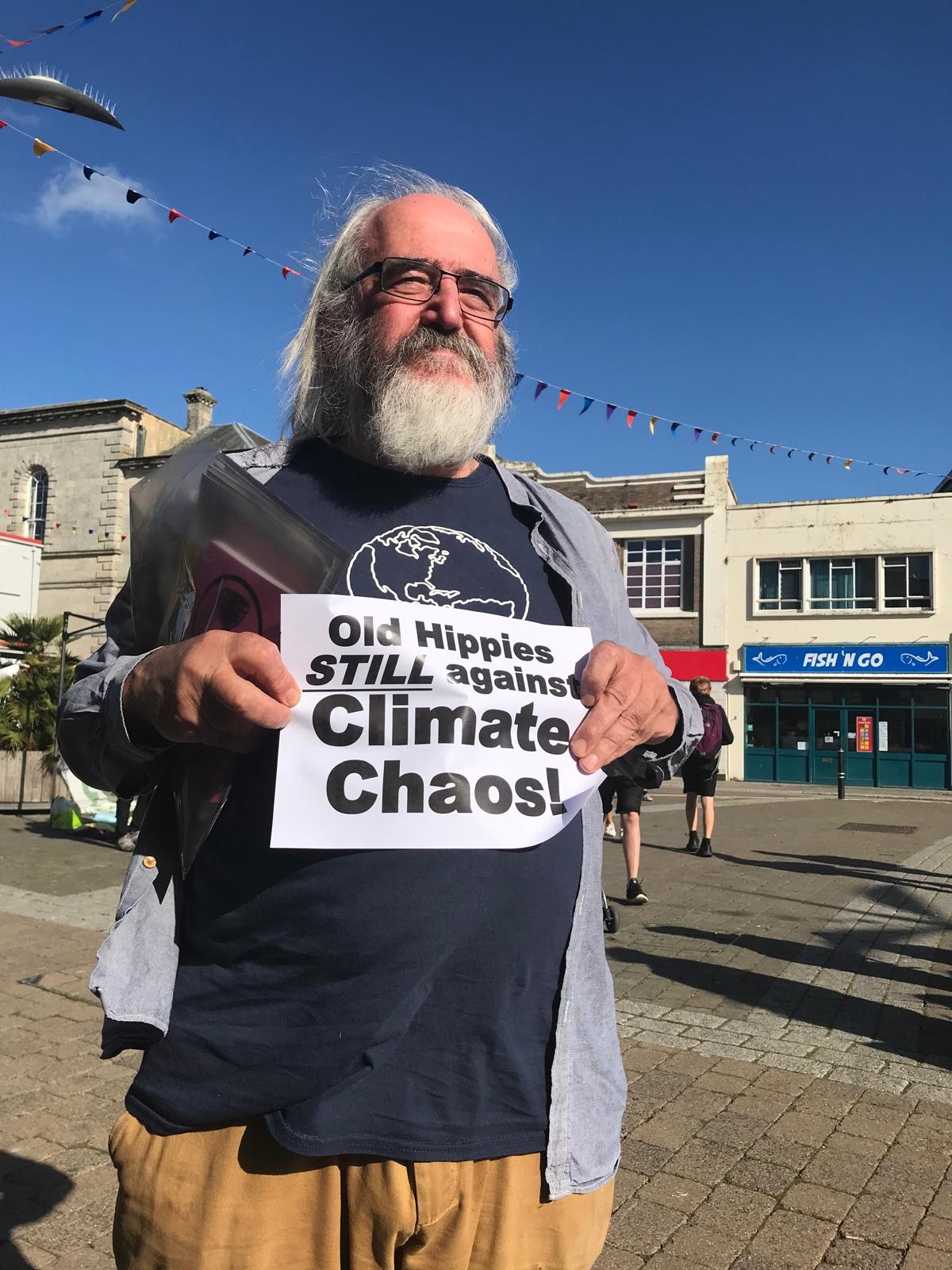
Our daughter is now increasingly taking over the reins of the organic food manufacturing business, which has given me more time to focus on climate justice and local energy initiatives.
I campaign to support Cornwall Council in developing a Local Area Energy Plan and use our business premises as an example of how a small family company can minimise environmental impact while maintaining stable employment. We already have a large roof-mounted solar array and vertical bifacial ground-mounted panels, and over the year we are grid positive for electricity.
In 2026, we hope to install a modest wind turbine to provide winter and night-time generation. Coupled with a sodium ion battery, this should further reduce our reliance on grid imports.
I am a director of Cornwall Climate Action Network and help organise twice-yearly Chacewater Community Energy Group events, which attract contributors and visitors from across Cornwall and beyond. I also engage with companies such as Cornish Lithium, Bennamann, Celtic Sea Power and Geothermal Engineering Ltd as a supportive local resident. These organisations are working in different ways towards a zero-carbon Cornwall, and my engineering background allows me to engage meaningfully with the technical discussions.
Parting Reflections
Looking back, I feel a deep sense of relief that I did not pursue a long-term career in the fossil fuel industry. As the scale of the climate crisis has become clearer, I am increasingly content with the direction I chose.
We may not rescue the planet entirely, but we have to try.