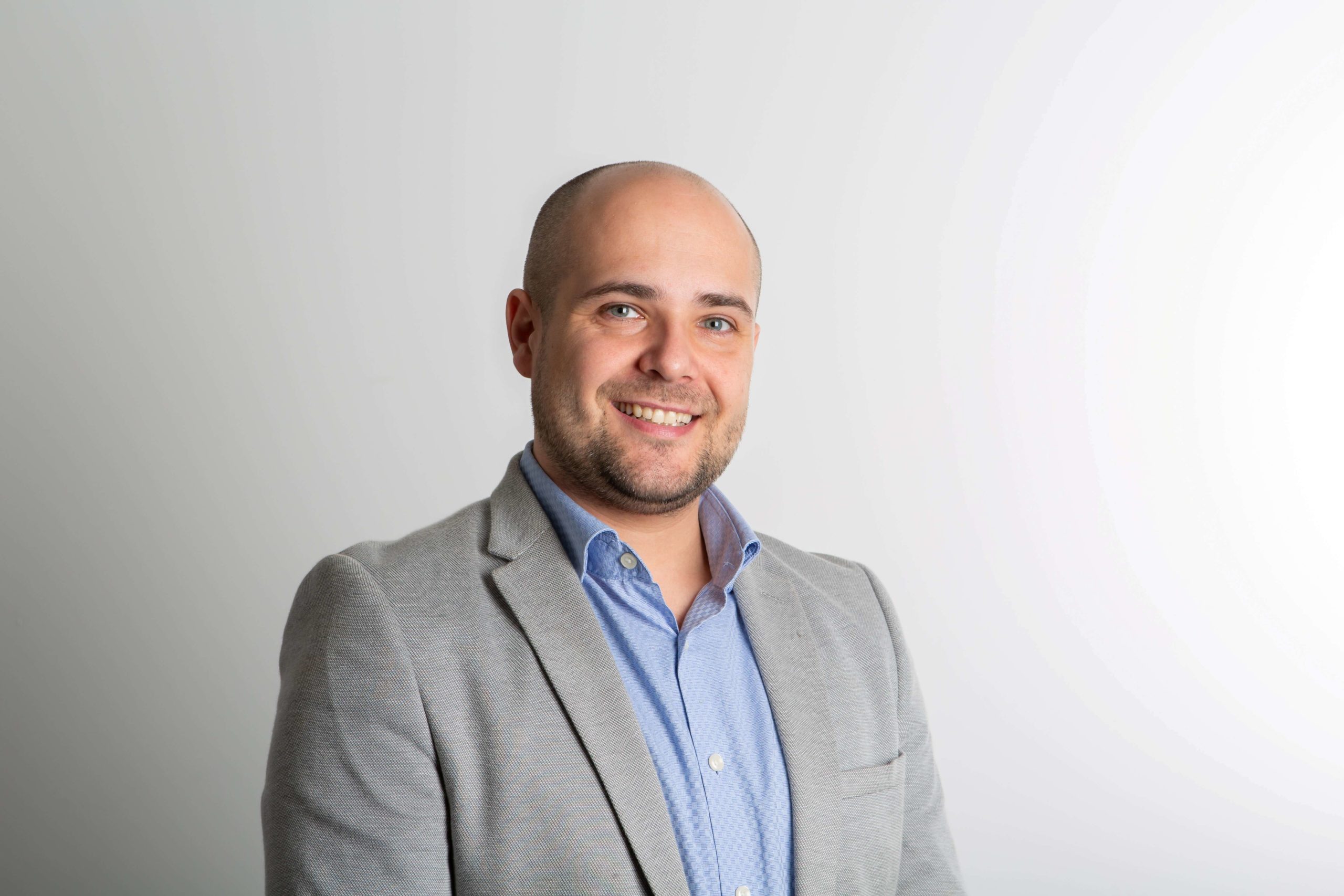
Ben's Story
Working in the Fossil Fuel Industry
At the age of 24 I joined the fuel industry in 2010, initially as a Marketing Assistant. At the time, I was drawn to the sector because it was fast-paced, commercially driven, and fundamental to how the economy functions. Energy sits at the centre of almost everything we do, and the opportunity to work in an industry with that level of impact was both exciting and motivating.
I progressed quickly, moving from Marketing Assistant to Marketing Executive and then to Marketing Manager across a fuel distribution business and its sister fuel cards company. Those early years were formative. They gave me a strong grounding in commercial strategy, customer relationships, and the realities of operating in a highly competitive and regulated environment. I was fortunate to work alongside experienced professionals who challenged me, trusted me with responsibility early on, and helped shape how I approach leadership and decision-making.
After leaving those businesses, I joined Craggs Energy, which at the time was a Northern-based startup fuel distributor. What began as a new role quickly evolved into something much more. I was invited to become a shareholder and director, and over the following 14 years we built, grew, and acquired a number of businesses within the fuel sector.
Today, that group includes Craggs Energy, the national fuel and infrastructure installation and servicing business LCM Environmental, and the fuel card provider Greenarc. Each business has grown significantly, both organically and through acquisition. I am extremely proud of what we have achieved together, the teams we have built, and the reputation those businesses hold within the industry.
There have been many highlights along the way: scaling operations nationally, navigating periods of rapid growth, successfully integrating acquisitions, and working with people who care deeply about doing things properly. The fuel industry is often misunderstood from the outside, but my experience of it has been overwhelmingly positive. It is technically complex, operationally demanding, and filled with highly skilled people who take their responsibilities seriously.
My time in the industry has formed the bulk of my career. It has been challenging, rewarding, and impactful, and it has given me the experience and perspective that underpin everything I do today. Most recently, that journey has led to the acquisition of a business outside the traditional fuel space in Heat Engineer Software, where I now devote the majority of my focus, while continuing to value and support the businesses that brought me to this point.
When I Realised It Was Time to Leave
This period was less about leaving something behind and more about recognising where my time, energy, and attention could have the greatest long-term impact.
There was no single moment where I decided to walk away from my existing world – and in many ways I haven’t. Instead, it was a gradual realisation that developed over several years. I remain active in the traditional energy sector and continue to value the role it plays today. What has changed is where I personally choose to place the majority of my focus, alongside a strong leadership team that continues to drive our established businesses forward.
As my awareness of the wider environmental challenge grew, it became increasingly clear to me that heating sits at the centre of the UK’s decarbonisation journey. Through my work in energy, I could see both the scale of the challenge and the pace at which large, established systems evolve. That is not a criticism, but a reality of operating in complex, regulated markets.
At the same time, innovation in low carbon heating technologies was accelerating. Heat pumps and low temperature systems were becoming more widely adopted, but it was also clear that outcomes varied dramatically. Too many installations were underperforming, not because the technology was wrong, but because system design and heat loss calculations were inconsistent or inadequate. That gap between potential and performance became increasingly difficult to ignore.
What resonated with me about Heat Engineer Software Limited was its focus on fundamentals. Accurate heat loss surveys and proper system design are essential if low carbon heating is to succeed at scale. The software addresses a real problem in a practical, engineer-led way, and it aligned closely with my own belief that long-term progress depends on doing things properly, not simply quickly.
The transition itself required careful consideration. Mentally, it meant balancing continuity with change. I was not stepping away from our traditional businesses, but instead working with my wider team to ensure they had the support to continue leading those operations day to day. Their experience and focus have been crucial, allowing me to strategically contribute while dedicating significantly more of my own time to developing and supporting this newer venture in our collection of companies.
There was also a degree of uncertainty in not having a fixed endpoint or predefined structure for how this shift would evolve. Rather than forcing a plan, I allowed it to develop organically, guided by where I felt I could add the most value. Regular conversations with my fellow directors, along with feedback from installers, designers, and partners in the low carbon space, helped provide clarity and confidence.
This type of thinking is what shaped our broader strategy. Rather than distancing ourselves from traditional energy, we made a deliberate decision to invest in a number of low carbon businesses that complemented our existing strengths. Heat Engineer Software Ltd was one of those investments, reflecting our belief that technology, data, and good design are critical to improving standards across the heating industry as a whole.
Looking back, this phase was not about leaving one industry for another. It was about evolution and balance. With the continued focus and leadership of my fellow directors across our established businesses, I have been able to shift more of my personal attention toward building tools that support the future of heating, while remaining connected to, and supportive of, the sectors that shaped my career.
What I’m Doing Today
Today, my focus is on helping to build and scale Heat Engineer Software, while continuing to contribute at a strategic level across our wider group of businesses. The reason is simple: I believe the quality of design and data behind low carbon heating systems will determine whether this transition succeeds in practice, not just in principle.
At Heat Engineer Software, we develop tools that support accurate heat loss surveys and proper system design for heat pumps and other low temperature heating systems. These are not abstract concepts. They directly influence comfort, performance, running costs, and confidence in low carbon technology. Being involved in a business that addresses those fundamentals feels both commercially sound and technically meaningful.
Many of the skills I rely on today are directly transferable from my earlier career. Understanding complex systems, managing risk, building credibility with engineers, and making decisions based on evidence rather than assumption have all translated well. Experience in regulated, high-stakes environments has also been invaluable as we scale responsibly and internationally.
What I have had to learn is a different pace and mindset. Software-led businesses demand constant iteration, close collaboration with users, and a willingness to adapt quickly. Perhaps more importantly, I have had to unlearn the idea that progress must always be slow to be safe. In this space, careful innovation, guided by real-world data and feedback, often delivers better outcomes than rigid process alone.
What excites me most about the low carbon sector is the culture around it. Collaboration is actively sought out rather than avoided. Installers, manufacturers, software developers, and policymakers are often working together towards shared goals. There is a genuine sense of momentum, and an openness to new ideas that makes the work constantly engaging. There is always something new to learn, test, or improve, and the atmosphere is overwhelmingly positive.
In many ways, my life today connects directly back to why I shifted my focus in the first place. I wanted to be closer to the part of the energy system where change could be implemented practically and measured clearly. I wanted more agency over outcomes. That is something I now feel strongly. Rather than watching progress happen at arm’s length, I am actively involved in shaping tools that enable it.
I have not lost respect for the traditional fuel industry. It remains imperative, highly skilled, and on its own journey of transition and improvement. I am proud of the progress being made there and of my continued connection to it. What I have gained, however, is a sense of alignment between my values, my work, and the future direction of heating.
There is also pride in what we have built. Heat Engineer Software is helping to pioneer a new sector, and its impact is no longer limited to the UK. We are now support thousands of engineers and designers in over 25 countries worldwide, across different markets, climates, and regulatory environments. Seeing our work adopted globally reinforces the belief that good design principles travel well.
Has it been worth it? Without hesitation, yes. The work is challenging, the responsibility is real, and the pace is demanding, but it is deeply rewarding. I feel fortunate to be contributing to something that is growing, collaborative, and genuinely constructive, while remaining connected to the industries and people that shaped my career.
Parting Reflections
I look back on my past with genuine pride. The fuel industry has shaped my entire career to this point. It has been demanding, technically rigorous, and deeply impactful. It has provided opportunities, challenged me, and given me a front-row seat to how large-scale energy systems operate in the real world. Quite simply, it has got me to where I am today, and I remain grateful for that.
If there is one thing I wish I had known earlier, it is that alternative energy systems are not competitors to be resisted, but allies to be understood. For a long time, it is easy to view new technologies through the lens of disruption or threat. With hindsight, I see them more clearly as complementary solutions, working within the same broad mission: to meet the world’s energy needs reliably, responsibly, and at scale. The goals are shared, even if the tools and timelines differ.
To anyone considering a move or a shift in focus, my advice would be not to frame it as an exit or a rejection of what came before. The skills, discipline, and perspective developed in established industries are not only transferable, they are essential to making new energy systems work properly. Progress does not come from abandoning experience, but from applying it in new contexts.
Equally, it is worth approaching change with curiosity rather than defensiveness. Learning about alternative technologies earlier, asking better questions, and engaging openly with people outside your immediate sector can fundamentally change how you see the landscape. The energy transition is not a single path, and there is room for many approaches, businesses, and viewpoints.
Above all, I would encourage anyone thinking about change to recognise that continuity matters. Your past is not something to distance yourself from. It is something to build on. The energy sector, in all its forms, is evolving, and those who bring experience, openness, and balance to that evolution have an important role to play.