
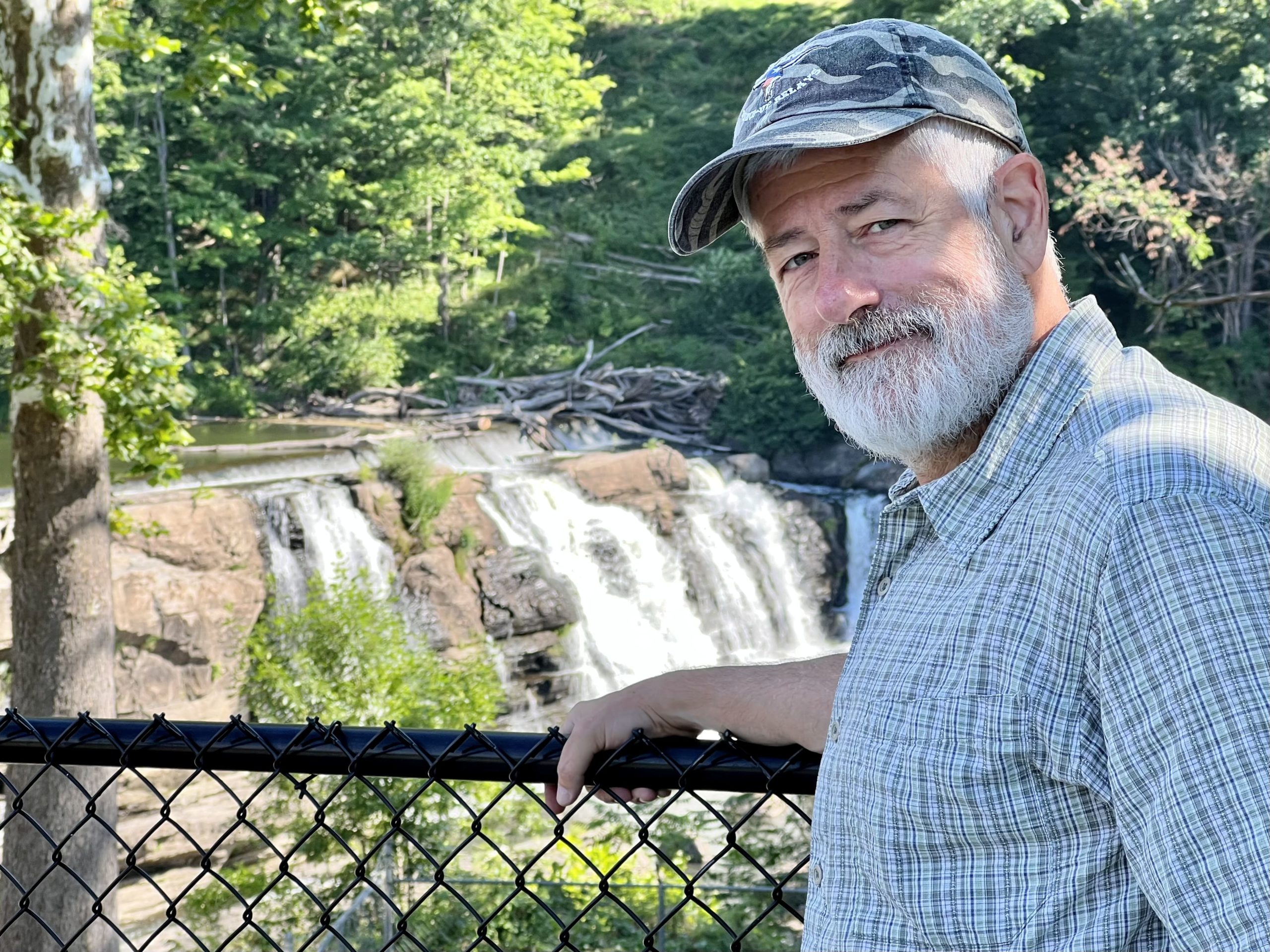
Bill's Story
Working in the Fossil Fuel Industry
I joined ExxonMobil’s Upstream Research Company in 2001 because they asked me. I had never planned to work in the hydrocarbon industry. At the time, I was an academic, eight years into a teaching career at a small public college in a rural US state, and on the verge of promotion. While the work was meaningful, the environment was intellectually isolating, poorly resourced, and offered little opportunity for the kind of research career I had imagined.
That changed abruptly at the 2000 Geological Society of America meeting, when an ExxonMobil representative invited me to Houston to present a seminar on my PhD research into palaeoclimate inferred from sand composition. What I did not realise was that the seminar was also a job interview. When I was offered a position at roughly three times my academic salary, I accepted with little hesitation. I later learned I was part of a unique hiring wave of professors that has not been repeated.
The intellectual shift was dramatic. My academic work focused on reconstructing ancient environments from sedimentary evidence. At ExxonMobil, I was asked to reverse that logic, predicting sand composition and reservoir quality from environmental conditions to support exploration decisions. I moved from an environment of scarcity and scepticism to one with extraordinary resources, world-class colleagues, and genuine interest in my research.
At ExxonMobil’s Upstream Research Company, known internally as “the Lab”, I helped develop the Sand Generation and Evolution Model, which was published and patented, and contributed to a palaeogeographic and palaeoclimate atlas integrating heritage Exxon and Mobil research. I later worked in the New Play Concepts group, imagining new types of hydrocarbon deposits and helping implement these ideas in frontier basins worldwide. Over 18 years, under both Lee Raymond and Rex Tillerson, I was able to pursue work that deeply engaged my curiosity about the subsurface and geological time. Life inside the industry was, in many ways, intellectually rewarding and personally comfortable.
When I Realised It Was Time to Leave
I left ExxonMobil and Houston for familial as well as professional reasons, after a series of so-called “500-year” flood events: the 2015 Memorial Day floods, the 2016 Tax Day floods, and Hurricane Harvey in 2017. Our neighbourhood of Meyerland was devastated. As geologists, we had chosen our home carefully, on a slight knoll that kept us inches above the floodwaters. We did not lose everything, as many of our neighbours did, but climate change had arrived at our doorstep in a deeply personal way.
At that point, I did not yet have a visceral sense of my own culpability. I simply knew that I wanted out of Houston. Many colleagues were spending their final years working remotely from Colorado, Utah, or North Carolina. I would have happily done the same, but remote work approval was highly manager-dependent and mine said no so I waited until my youngest left school to retire.
Life after ExxonMobil was far less certain than I had imagined. I assumed I would continue consulting in the industry, but competition was fierce as waves of retirees pursued the same path. Eventually, I took a full-time role with a vendor I had worked closely with while inside the company.
As ExxonMobil receded into the rear-view mirror, my understanding of the industry’s role in climate change and its broader social impacts sharpened. Reading books such as Private Empire, Blowout, Cobalt Red, The Brothers, and Cronies helped me place my own comfortable experience within a much darker historical and geopolitical context.
During Covid, as energy prices crashed and oil majors hollowed themselves out to survive, the stories I heard from former colleagues still inside added another layer. Almost no one came through that period unscathed.
What are you doing today?
Today, my employer, which once relied overwhelmingly on hydrocarbon revenues, has been forced to change. We still work in natural resource exploration and exploitation, including petroleum, but we now also support exploration for copper, lithium, natural hydrogen, and geothermal heat.
None of these resources are without baggage, but they offer pathways away from a global addiction to carbon-intensive energy.
Parting Reflections
I remain endlessly curious about how the Earth works and deeply fascinated by Earth history. Hydrocarbon-funded drilling has contributed an enormous amount to our understanding of the planet, and it continues to do so. Even though I now work more on the brighter side of the energy universe, I still believe that working with the oil industry is not entirely evil.
Oil companies pay us to uncover Earth history and that funding keeps us alive to work on other resources. Without it, much of that money would be wasted on executive compensation, stock buybacks, or political influence.
These days, I am working less. I spend more time volunteering as a lecturer at local universities and community organisations, and more time hiking in the nearby mountains, where there are still countless untold chapters of Earth history waiting to be uncovered.