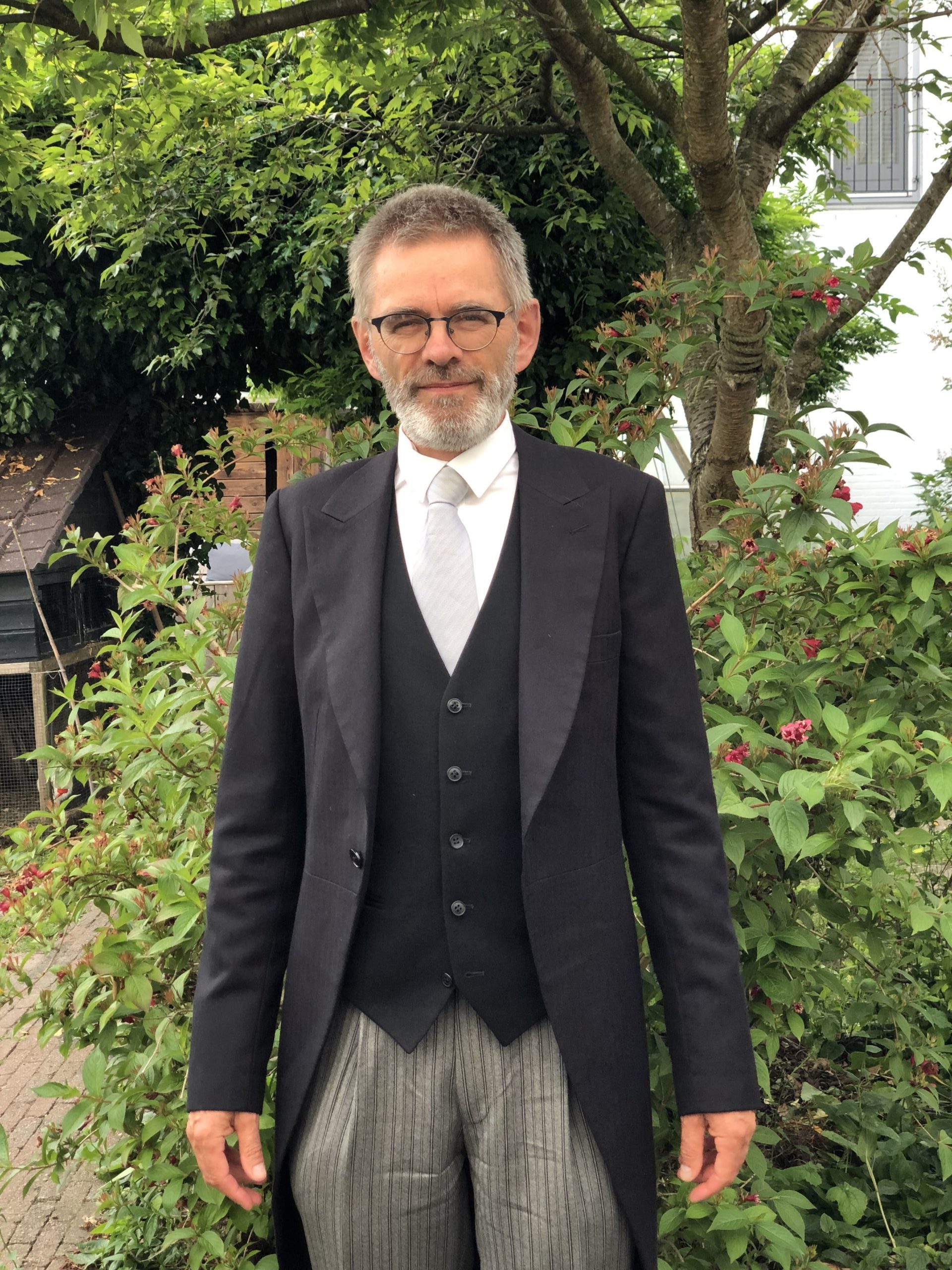
Evert's Story
Working in the Fossil Fuel Industry
I joined Shell in September 1991, drawn by several clear motivations. I wanted to work with professionals in an environment that valued collaboration and challenge. I was interested in the opportunity to work abroad, and I believed Shell aimed to be of value to the societies in which it operated.
I spent most of my career in research and process development within chemicals and later biofuels. What always appealed to me was the complexity of process development and working at the intersection of technology, economics, safety, local conditions, and global political and societal developments.
One of the highlights of my career began almost casually. On a Friday afternoon, together with a colleague, I initiated work on a new polycarbonate technology. It reduced capital expenditure and energy use and avoided phosgene entirely. That technology is now commercialised in China. I was also involved in biofuels technology development, including work on cellulosic ethanol that was later commercialised in Brazil.
Shell’s culture mattered to me. Safety awareness was embedded in everything we did, from protecting our own operations to considering impacts on society and nature. The principles of honesty, integrity and respect for people were not just words on paper. The open culture of speaking up, respecting different opinions, and the sense that decisions could genuinely make a difference to the world were strong motivators throughout my career.
In early 2022, I became a Principal Scientist. This brought new opportunities to engage with colleagues working on green technologies and to contribute more actively to discussions about climate change and Shell’s role in the energy transition.
When I Realised It Was Time to Leave
For me, leaving Shell was not a single moment, but a gradual transition that unfolded in stages.
The first step came in 2005, when I moved from chemicals into biofuels. I was motivated by two things: the opportunity to work on green technology and the challenge of entering an entirely new field.
The second step came much later, in 2021, following Shell’s Powering Progress strategy update. The strategy committed to a 20 percent reduction in carbon intensity of products sold by 2030, while also claiming alignment with a 1.5 degree Celsius pathway. From a scientific perspective, this was inconsistent. A 1.5 degree pathway requires roughly a 45 percent reduction, while 20 percent aligns more closely with a 2 degree scenario.
After internal and external consultation, I concluded that the most constructive thing I could do was initiate discussions about climate change internally. To avoid burn-out, I set myself a realistic goal. I was not trying to change Shell. I was aiming to start conversations with my direct colleagues.
When I became a Principal Scientist in early 2022, I joined a group of around 70 colleagues, many of whom I already knew. I enjoyed networking with peers engaged in green technologies and raising difficult but necessary questions such as what are the business risks, and how did this align with Shell’s ESG and Code of Conduct commitments?
The third and final step came with the launch of Shell’s ETS-24 strategy update in March 2024. The strategy outlined stable oil production, growing gas, the removal of most shorter-term targets, and no clear strategy beyond 2030. This sat in sharp contrast with a stated Net Zero Emissions target by 2050.
It took me about a week to fully process the gap between the green messaging and the reality behind the words. Net zero by 2050 was communicated as an absolute target, yet in face-to-face discussions, no one genuinely believed it would be achieved, and those who did could not offer a credible pathway. The silence around this contradiction suggested acceptance. For me, that was the moment of clarity. I knew I could not stay.
Leaving was emotionally difficult. I loved my work and had built a wide network of valued colleagues. I informed my line manager in July of my decision to resign by November, and in September I told my colleagues. The final months were filled with farewell coffees, reporting, a farewell lecture and a farewell party. The warmth and support I received confirmed how strong those relationships were.
What are you doing today?
After leaving Shell, I faced the reality that finding alternative work was not straightforward. At the same time, I felt a strong desire to use the freedom I had regained to speak openly in public.
I requested early retirement, which was granted. I now undertake some limited consultancy work. I am active on LinkedIn, have engaged with radio and newspaper media, and am building a broad network across education, government, industry and NGOs. My aim is to raise awareness and sensitivity around climate and energy issues, in ways that encourage thinking and action.
I have lost the daily work I enjoyed and the social network that came with it. What I have regained is the freedom to speak openly and to live fully by the values of honesty, integrity and respect for people. I did what I could within my sphere of influence and chose to leave before compromising those values. It was heavy lifting, but there was no alternative for me.
Parting Reflections
If faced with the same situation again, I believe I would make the same decisions.
When I began internal discussions about climate change, I quickly realised that trying to change Shell as a whole was unrealistic and personally unsustainable.
I am drawn to activism for its energy, care and sense of justice. At the same time, reality is complex, and solutions take time to develop. Scientists speaking up and debating play a different but complementary role. Framing the choice as activism versus collaboration creates a false dilemma. What truly matters is a safe culture where people can speak up, identify issues and work together on solutions.
I never experienced push-back on climate discussions inside Shell. On the contrary, they were often encouraged. During that period, I deliberately blocked external personal contacts to keep internal discussions internal. Reconnecting with friends after more than two years of silence was a relief.
One final piece of advice for employees is this: stay as long as you can endure. Do not speak up too early. First, build knowledge and a trusted network. Your time to speak will come.