
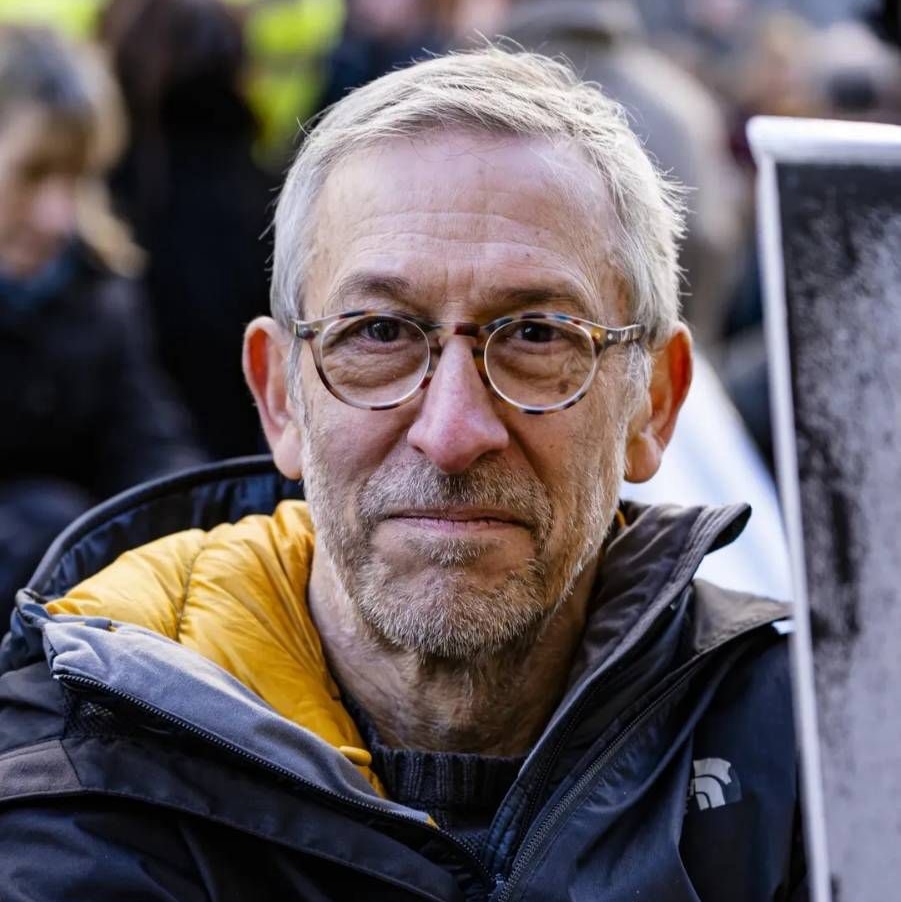
Grahame's Story
Working in the fossil fuel industry
In 1983 with a PhD in fluid mechanics and two years of postdoctoral research I joined Shell Research at the UK Thornton Laboratories. I worked in research and development until 2016. From 1983-89 my projects were mostly about the capture and storage options of hydrocarbons from refineries, tank farms, fuel tankers and petrol stations. This was predominantly methane capture but also benzene (a known cause of testicular cancer and a concern for tanker drivers at that time). In 1990 I moved to Amsterdam and worked on membrane separations in chemical engineering projects.
Back in the UK from 1994 to 1998 I joined the explosion hazards team. Amongst other projects I studied the mixing of hydrocarbon gases with air in vent pipes. From this I concluded that methane gas venting be reduced by 90% at least, with no explosion risk, and that this change be included in the Shell Design and Engineering Practice (DEP). Later came a large study on explosion hazards in oil rigs joint with BP, the UK Health and Safety Executive and Cambridge University.
There came a point towards the end of these projects in 1998 when I said I didn’t have enough to do! I was given a new project and a promotion to Principal Scientist. This led quickly to my involvement with a Shell initiative looking for new consumer businesses. Amongst other things I proposed that Shell move into home insulation. Further Education colleges were keen but Shell didn’t take this up. It wasn’t seen as close enough to the core business. In 2000 Shell started a short-lived hydrogen business. I looked at hydrogen refuelling and storage options and related safety issues. A year later I was put on the management team of one of the departments in the Amsterdam laboratory and headed up the ‘Gamechanger’ programme. This was mostly ideas drawn from internal staff and this of course included me, but we also looked externally and received ideas from the public. In 2004 the Shell CEO Jeroen van der Veer said he wanted to find the new 6th Shell business. In Gamechanger we had been considering whether there were enough biomass resources, within the constraints of other land uses, for a global biofuel market and whether they could be economically converted to fungible replacements for fossil fuels, with low climate warming effects (spoiler alert – there isn’t and they can’t). But this was an area I pursued with my colleagues until I took voluntary severance in 2016.
The lignocellulosic and algae programmes taught us one thing – it doesn’t work. As far as the oil industry is concerned this leaves vegetable oils and ethanol from sugar crops. The main oil crops are palm oil, soy and rapeseed. (It is outrageous that vegetables oils and particularly virgin palm oil are used to make diesel and jet fuel). Used cooking oil is processed to diesel and jet fuel. This will never replace fossil fuels but it will sadly encourage their use.
Around 2013 I was invited to join a government sponsored project with the Department of Energy and Climate Change (DECC) called the Global Calculator. The DECC Chief Scientific Officer David MacKay set up a programme to gather all the meaningful options to prevent global warming exceeding +2° C (later 1.5° C). There were about 70 options in all. Each option went from little change to pushing beyond the boundary of what was credible. What was concluded was that to keep to +1.5° C or less we needed almost everything at the top end and a phase out of oil, gas and coal. This included significant reduction in demand. At DECC’s request I presented this work, with Imperial College, in the Palace of Westminster in 2015.
When I realised it was time to leave
2016 I was asked to stay on for another year, and I might have if there were credible solutions for Shell for a transition out of fossil fuels. But there aren’t. Shell made it clear – the solution has to work seamlessly with and include the interests, continuation and expansion of the oil and gas sector. It was clear that radical change was needed, but this would not come from Shell.
There was no epiphany for me, but rather an increasing concern and eventually despair that so little had been done and so much was still to be done. I felt increasingly distanced from Shell; increasingly alone. I’d seen 30 years of kicking the can down the road (of which I was a part).
Shell didn’t deny climate change but it minimised the concerns – it left the denial to others. In Amsterdam in 1991 Shell allowed Greenpeace to give a presentation on ‘global warming’. Phil Watts – the head of Exploration and Production (E&P) and on the board of Shell – chaired the meeting. Greenpeace gave a presentation that the board of Shell knew was broadly true. Watts presented an alternative view minimising the concerns. The first time I heard an explicit alarm within a Shell building was from Greenpeace.
Around 2005 I got to know and admire Ron Oxburgh (Lord Oxburgh – former Chief Scientist to the UK Government). Ron was the Shell company chair and the only person at board level who I ever heard express the urgency of the climate crisis.
I appreciated the opportunity that DECC gave me. At a series of meetings with the Department for Transport (DfT) at which Greenpeace and Friend of the Earth (FoE) were present I found that I agreed with them. The failure of Biomass to Fuel to provide a transition for the oil and gas sector left Shell with the broadly irrelevant option (without reduction in demand) of carbon capture and storage.
I was right about some things but I was wrong about many things. Primarily, Shell’s real intentions. I wonder now sometimes if I was not really working for the PR department.
What are you doing today?
Early in 2019 I joined Extinction Rebellion (XR). This was a life changing event. I am now part of a nonviolent civil resistance community where I more recently have supported the campaign Just Stop Oil. I was a spokesperson and took part in nonviolent civil resistance to raise awareness of the need to stop drilling for new oil and gas and so to influence the Government.
We know that Shell has a long history of minimising and not disclosing the impact of climate change, while paying climate change deniers to lie and obfuscate on their behalf. There is a reason that the largest number of lobbyist at COP are from the fossil fuel sector. However through XR I joined a group of predominantly ex-oil people trying to engage with the O&G sector on rapid change. We were met with the classic ‘Only meeting demand’ argument which in my opinion is patently untrue. The Dutch courts called this ‘the drug dealer defence’. Of course it isn’t just Shell. At Energy Week 2024 (where I was a speaker for Just Stop Oil) the CEO of Vitol, Russell Hardy, said that demand for gas in European households had dropped 10-12% since covid so now we are ‘trying to create new demand for gas’.
The board of Shell preserves shareholder value to maintain their jobs and their status. It’s a game and they want to win. To do this the company must grow – or as their previous head of strategy, Ed Daniels said of a shrinking market – ‘to be last man standing’. This is why the very clever scientist and company chair Sir Andrew Mackenzie FRS, who knows how serious the climate crisis is, says he is ‘optimistic’. He is preserving shareholder value. This is also why the Shell scenario team makes outrageously optimistic statements about unproven and fabulously expensive technologies that will supposedly suck carbon out of the atmosphere – its preserving shareholder value and providing the excuse to carry on.
Parting reflections
There are good people in Shell. If you are one of them – now would be a good time to leave.