
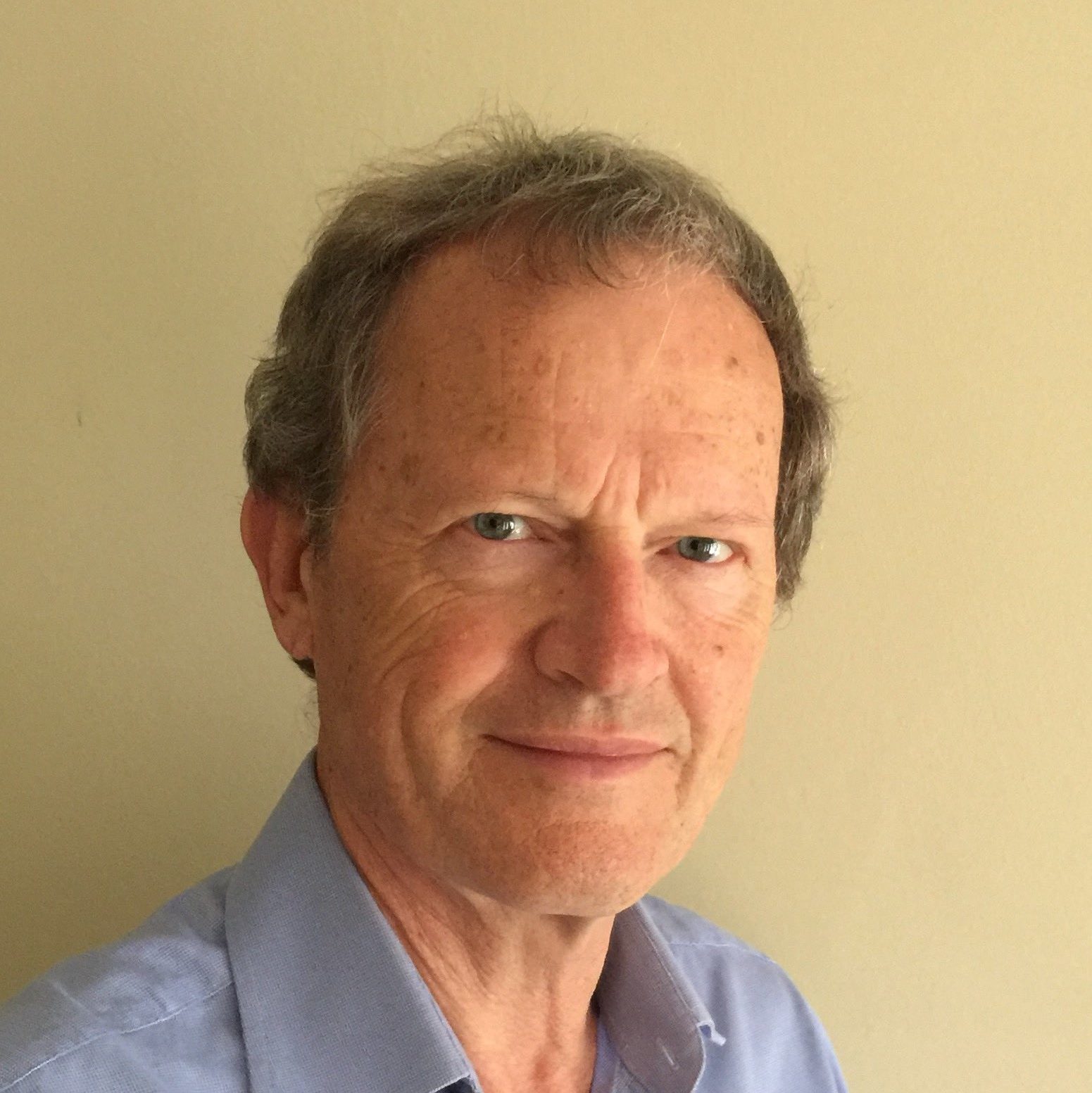
Lionel's Story
Working in the Fossil Fuel Industry
I have always been fascinated by energy—its many forms, the principle of conservation, and its central role in technological and economic development. That interest led me to study physics at Imperial College, followed by doctoral and postdoctoral research at the Cavendish Laboratory in Cambridge and in Grenoble, France. However, when offered a permanent academic position, I realised that what really motivated me was the application of science to real-world challenges. Instead of staying in academia, I joined Shell Research in 1981.
I sought a complete change. Shell suggested I work on transport fuels, an area about which I knew nothing and therefore ticked the box. Soon afterwards, I was asked to help develop a way to phase out leaded gasoline, to enable the widespread introduction of catalytic converters and thus reduce tailpipe emissions without damaging engine performance. Being unencumbered by prevailing yet incorrect ideas proved surprisingly useful in my identification of a novel solution. By developing alternative engine protection strategies, identifying new high-octane refinery components and redefining blending approaches, I was able to contribute to initiatives that were rapidly deployed across markets ranging from Europe and the Americas to sub-Saharan Africa. It was an exciting introduction to how large-scale industrial innovation and market reach can translate ideas into globally significant solutions.
Over the following years I worked in the UK, the United States and Shell’s London headquarters on a wide variety of local and global projects. Taking responsibility for transport fuel developments in emerging markets, including Brazil, introduced me to the country’s extensive use of sugarcane-derived bioethanol. When Shell began exploring biofuels as a potential route to reducing dependence on fossil fuels in 1999, I became the fuels technology adviser to the programme, helping establish a global R&D network and a series of academic partnerships. We recognised that biofuels could never replace fossil fuels completely, but they offered an opportunity to make a meaningful and timely contribution using existing fuel infrastructure.
Shell was keen to be a global leader in biofuel development, and I was invited to speak at major international conferences from Houston and Geneva to Stuttgart and Qingdao. The subject was often controversial. Climate change was not yet widely accepted, and proposals to expand biofuel use frequently encountered resistance from other parts of the oil industry, economic community and automotive sector. In 2010 I was invited by Ernie Moniz, later US Energy Secretary, to address a gathering of senior US oil executives and economists ahead of COP16, providing an alternative perspective to the prevailing climate-sceptical narrative.
As Shell approached its centenary in 2007, many of us were considering what the company might look like in its second century. While biofuels alone could never provide a complete answer, they represented an important early step towards a lower fossil-carbon energy system. I found it both stimulating and rewarding to be part of that debate and to help shape initiatives that sought to reconcile long-term sustainability with practical commercial realities.
When I realised it was time to leave
Looking back, the financial crisis of 2008 may have marked the beginning of a wider reassessment of long-term research programmes within Shell. The subsequent retirement of the senior Downstream fuels executive who had initiated and supported the biofuels programme began a gradual loss of support for the biofuels programme. The corporate decision to close our global downstream fuels, biofuels and lubricants research laboratory in the UK resulted in the reassignment of many colleagues.
Personally, I also felt I had reached a natural turning point. After more than a decade of work, the original objective of helping deploy first-generation biofuels internationally had largely been achieved, whilst newer technologies we had developed such as lignocellulosic biofuels were progressing steadily towards commercialisation. Yet I was becoming increasingly concerned about the limits on future fossil-carbon release into the atmosphere as highlighted by Berners-Lee and Clark in ‘The Burning Question’ and the clearly inadequate pace of global progress on climate change in general.
For several years I had also been exploring the potential role of carbon removal, particularly through biochar, but Shell had decided that it did not fit existing business models. To me, however, biochar offered something distinctive: the possibility of removing carbon from the atmosphere through relatively simple, distributed technologies that could be massively scaled via farmers and smallholder communities around the world and authenticated via digital technologies. In 2014, I decided to leave Shell and focus my efforts on that challenge.
What I'm doing today
After leaving Shell, I founded BionerG Ltd, initially as a biochar consultancy and subsequently as a biochar production and carbon removal company. We now operate a development and demonstration facility in North Wales and work with farmers in the UK, Africa and elsewhere to produce biochar from a range of locally available feedstocks and to evaluate the benefits of biochar for soil health, crop productivity, animal welfare and environmental services.
My original interest in developing affordable systems for Africa helped shape our approach. Biochar kilns can be built locally at low cost, while monitoring, verification and carbon accounting are carried out digitally using sensors, mobile communications and internationally recognised standards. The system is being successfully deployed in East Africa, including within a refugee settlement where biochar is also used to support water purification. This work has been recognised through a nomination for the 2006 Earthshot Prize.
My aim is to make it possible for anyone concerned about climate change to actively participate in carbon removal, either by actively engaging in biochar production, or by engaging financially by purchasing tokenised carbon removals and delivering liquidity into this expanding space. I consider it important not to remain dependent upon large corporates and governments over whom one may have little or no influence to deliver the solutions we want to see implemented.
Alongside this work, I spent thirteen years chairing an advisory board to the UK Government on what is now known as Engineering Biology. Beginning with the UK Roadmap for Synthetic Biology in 2012, this is now identified in the government’s Modern Industrial Strategy as one of the six frontier technologies critical to driving economic growth. While many early successes have been in healthcare and pharmaceuticals, Engineering Biology is increasingly being applied to challenges in food, materials and sustainable manufacturing. As society seeks alternatives to fossil fuels and petrochemicals, these technologies will play an important role in providing renewable sources of carbon for the future. I was honoured to be awarded an OBE in 2018 for my contribution to this area and remain very active working on external advisory boards with companies and universities to continue exploring and evaluating the transformative options that our future will depend upon in a post-oil world.
Parting Reflections
I left Big Oil at a time when I could still feel very proud of the developments to improve local and global emissions we had been able to deliver, against the odds. Clearly the more recent retractions in ambition to tackle climate change are very concerning and I can understand the clamour to challenge the lack of ambition of Big Oil to make wholesale changes to their business models. My own experience of the (now mostly forgotten) transition from leaded to unleaded gasoline, involving extensive cooperation between all Big Oil companies, automotive manufacturers and governments, show what is possible when there is common recognition of a shared problem, in that case the need and technological possibility to reduce local emissions. But the biofuels story shows how difficult it is for an individual company, no matter how big, to make much headway in isolation.
Whether or not to leave will clearly be a very personal decision. I have set out to identify ways in which small companies could develop potentially significant alternatives to big oil, and working outside provides boundless opportunities to explore and evaluate this space. But I can also see that the resources of Big Oil are so great that they could also help develop other planet-compatible solutions as needed if they could envisage the long-term commercial advantages of technological transition and leadership, as we were starting to frame 20 years ago, and re-balance this against excessive focus on the short-term financial bottom line.
I am aware that my own positive experience resulted from the vision and drive of just a few individuals near the top of the organisation. Individuals can provide a significant steer to the direction of even very large organisations. If you are on a fast-track, or already in a senior position, please remain and lend your voice to shifting the narrative back to recognising that the oil company that manages the sustainable climate transition best may be the only one still standing at the end of this century!