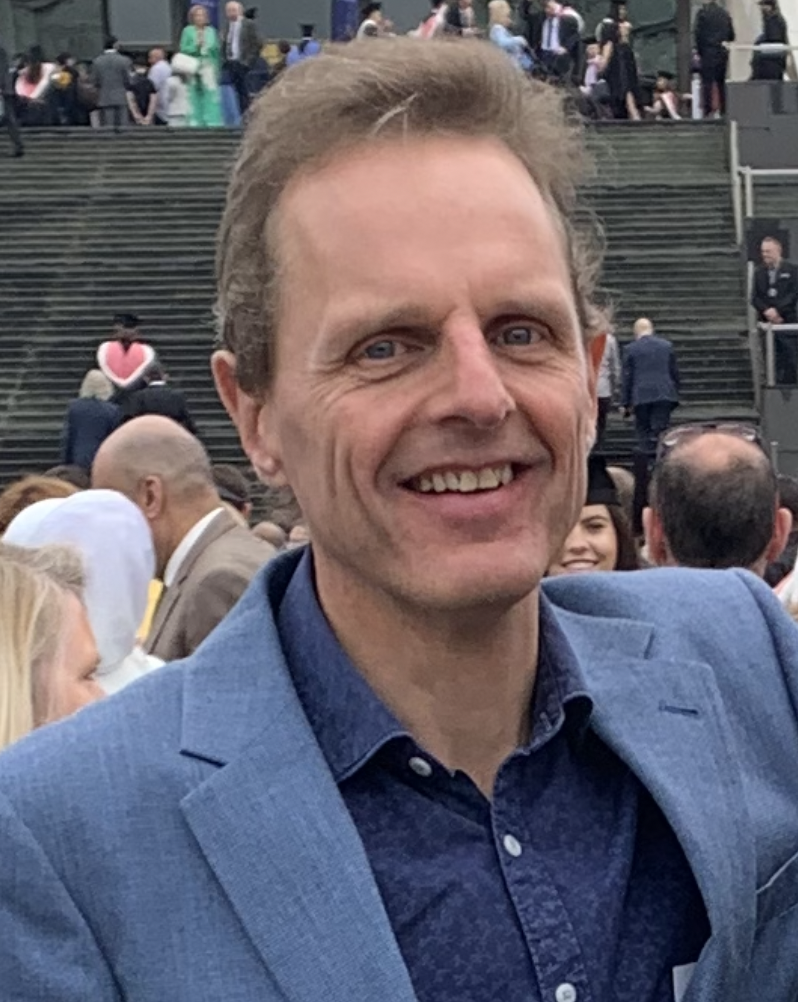
Nick 's Story
Working in the Fossil Fuel Industry
Some of my earliest memories are steeped in fossil fuels. I remember clambering around the cab of the Knutsford Domestic Fuel Oil Company’s bright yellow tanker, the sweet, acrid smell of kerosene embedded in the seats. My father had bought the tanker after leaving the family business around the time I was born. Alongside domestic oil, he supplied coal from some of the last privately owned coal mines. I still remember visiting Apedale Colliery and watching miners surface from a long shift, faces black with coal dust, while I helped myself to a piping-hot pork pie from the tray my father carried.
My family connection to fossil fuels goes back generations. My great-grandfather began work at Astley Green Colliery near Wigan at the age of ten and went on to build one of Manchester’s leading coal suppliers, serving Trafford Park during the war years. Those years also saw my grandfather die shortly after the coal depot was destroyed in the Manchester Christmas Blitz, and my father sent down the mines as a Bevin Boy.
My own professional career in fossil fuels began in 1997 when I joined what remained of the century-old family business. At that point, there were only a handful of coal and oil customers left, alongside a trade magazine for fuel distributors, Fuel Oil News, which my father had founded. Shortly afterwards, I set up a recruitment business serving the downstream oil industry. For 25 years, we recruited people into oil trading and fuel supply companies, working across a sector that was changing but still deeply embedded in everyday life.
When I Realised It Was Time to Leave
I have not left oil entirely, and I do not pretend that the dilemma is simple. Society still depends on oil in the short term, even as we urgently need to stop using it to ensure medium- and long-term survival. Over time, I have come to see a clear distinction within the industry: companies that are using their cash flows and customer relationships to help build the future, and those that continue to deny the facts while lobbying for ever more production.
My interest in the environment goes back to my school geography lessons and my decision to study Geology at university. In 1989, I ran the Bristol Friends of the Earth group, and after graduating I chose to work in low-carbon transport, joining the railway industry as a management trainee. My final role there was as Brand Manager for the Cambridge to London line, where I set up the first integrated rail-bike hire ticket.
Alongside recruitment, I also built a renewable energy media business focused on installation markets. At its peak, it generated more than £1 million in annual revenue, but it failed to maintain scale after the abrupt removal of solar PV subsidies under David Cameron’s government.
What changed most profoundly over time was my faith in the establishment. I once believed that corporations and governments would work together to deliver the energy transition. Looking back, that now feels naive. The moment John Browne broke ranks as BP CEO in the late 1990s should have been more telling, but it was not until around 2015, when major newspapers exposed the coordinated efforts by Exxon and others to deny and downplay climate science, that the reality fully sank in for me. From that point on, it became impossible to ignore how entrenched resistance to change really was.
What I’m Doing Today
In 2018, we renamed our recruitment business from Oil Recruitment to Eleven, reflecting a deliberate shift in focus. Since then, we have transformed our revenue base from around 80 per cent oil and gas to under 1 per cent by 2026. Today, our core sectors are low-carbon power generation and climate technology. We support clients working on advanced battery materials, hydrogen, energy from waste and grid expansion to enable renewable energy generation.
Alongside this, Fuel Oil News continues to serve distributors of essential fuels as they grapple with the reform of their businesses for the future. The publication increasingly explores the role of biofuels and other transitional solutions, recognising both the reality of current energy needs and the urgency of change. I’m also a Director of Portland, a business established to provide financial instruments for price protection and compliance in the fuel supply chain. It became involved in fuel supply shortly after being formed and has now diversified into the manufacturer of AdBlue, an emissions treatment fluid, grain storage and property management.
Outside of business, I’m a great fan of the People Planet Pint network and am a local host, as well as a member of the advisory board. I’ve also been deeply involved in community sustainability and have run a local for many years. Next steps involve a plan to establish an agro-ecological co-housing project.
Parting Reflections
Looking back on my journey I can still feel the impact of those long-running campaigns that planted doubt about climate science. The book Merchants of Doubt reveals how this was done on purpose, first by tobacco companies and later by oil companies, to protect their businesses. Even now, I sense that much of this doubt is still there, quietly shaping how people think, including myself. We all know this disinformation was manufactured, but its effects can stick around in subtle ways. It doesn’t define everyone, but it’s a reminder of how deeply trust, information, and identity are linked—and how they shape the choices we make. Thinking about this helps us be more understanding and patient with each other as we work together toward a cleaner, fairer future.