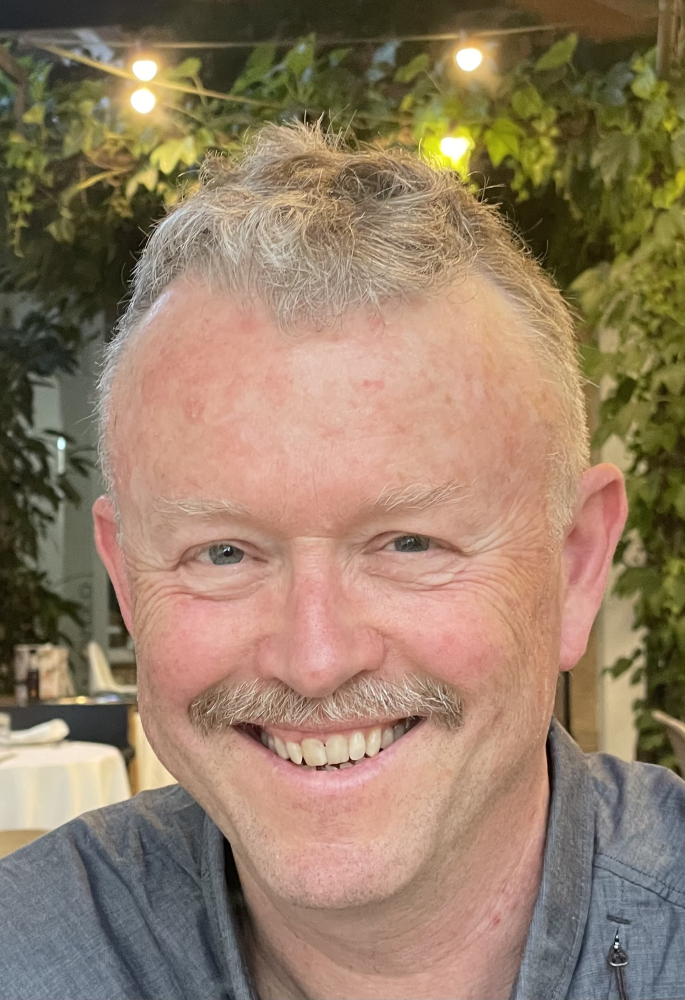
Philip's Story
Working in the Fossil Fuel Industry
My career began in environmental geology rather than oil and gas. After completing my PhD at the University of Strathclyde, I worked in engineering geology consultancy in London, focusing on radioactive waste disposal and environmental cleanup after oil spills.
At the time, I did not intend to join the oil industry. However, after the UK radioactive waste programme I was working on was cancelled, I moved into research at Heriot-Watt University in Edinburgh, joining a highly dynamic group focused on integrated reservoir engineering and flow modelling.
That work attracted major industry interest, including from Statoil, who eventually invited me to Norway to work at their research centre in Trondheim. There, I applied geoscience and modelling expertise to improving oil recovery from challenging offshore reservoirs in Norway. Later, I joined the Åsgard field development team, which at the time was the world’s largest subsea hydrocarbon development.
A major turning point came during the creation of StatoilHydro, when I moved into work on the In Salah CCS project in Algeria. Suddenly, my background in reservoir characterisation and geomodelling became highly relevant to carbon capture and storage and climate action. That work connected me with industry, researchers, and policymakers around the world.
When I realised it was time to leave
In many ways, I never felt the need to fully “leave” because from 2007 onwards I was already working inside Equinor’s low-carbon energy solutions group.
Our team focused on decarbonisation and CCS, often acting as internal advocates for change. It was an exciting period, but also a difficult one. Many promising initiatives struggled because there was no viable business model to support them.
At the same time, CCS projects often faced public criticism and misunderstanding, despite their technical success. However, one major breakthrough eventually emerged from the remains of Norway’s cancelled “moon landing” CCS project. Between 2016 and 2018, our small research group helped design a lower-cost CCS value chain that later became the Northern Lights and Longship projects which are now internationally recognised examples of large-scale CCS deployment.
Throughout this period, I remained active academically, first through Heriot-Watt University and later as Adjunct Professor at NTNU, where I was eventually appointed Professor of CO₂ Storage. Over time, the transition into academia became increasingly natural, and I ultimately took voluntary early retirement from Equinor to work full-time at NTNU.
What I'm doing today
Today, I am Professor in Energy Transition Geoscience at NTNU and part of the Centre for Geophysical Forecasting, a major research and innovation centre exploring how geophysical technologies can help monitor both natural and engineered systems.
Our work spans marine environments, geohazards, deep earth imaging, CO₂ storage, and broader energy systems. One of the most rewarding aspects of the role is the opportunity to explore new ideas through research while helping students and early-career scientists navigate a rapidly changing energy landscape.
I continue to work on CCS, reservoir geoscience, and subsurface flow systems, and I have published extensively in these areas. More recently, I have focused on sharing knowledge through teaching and textbooks, including How to Store CO₂ Underground and Reservoir Model Design.
What excites me most is helping shape a future where geoscience skills play a critical role in climate solutions, energy transition, and infrastructure resilience.
Parting reflections
I understand the moral tension many people in the energy sector feel: balancing the reality that the world still depends on fossil fuels while wanting the clean energy transition to move much faster.
Rather than defending the past, I believe it is more productive to focus on building practical pathways toward new energy systems. The transition is complicated, and there is a great deal of misinformation and polarisation around it. Remaining grounded in evidence and practical solutions is essential.
One thing I feel strongly about is the continuing importance of subsurface skills such as geology, geophysics, and engineering. In an age increasingly dominated by AI and digital systems, it is easy to assume these disciplines are becoming less relevant. In fact, the opposite is true.
Everything I have learned about climate change, CO₂ storage, water systems, and energy transition suggests that geoscience expertise will become even more important in the decades ahead.